

Fire Stopping Surveys
Last reviewed:
A fire stopping survey checks the seals where services and gaps pass through fire-resisting walls and floors: penetration seals around pipes, cables and ducts, linear gaps, risers, ceiling voids, plant rooms and service cupboards. Fire Stopping Surveys, a trading name of RiSKFiX LLP, photographs, locates and describes every observation, and gives a recommended remedy for each. The result is a clear record your Responsible Person and Fire Risk Assessor can act on.
What does a fire stopping survey look at?
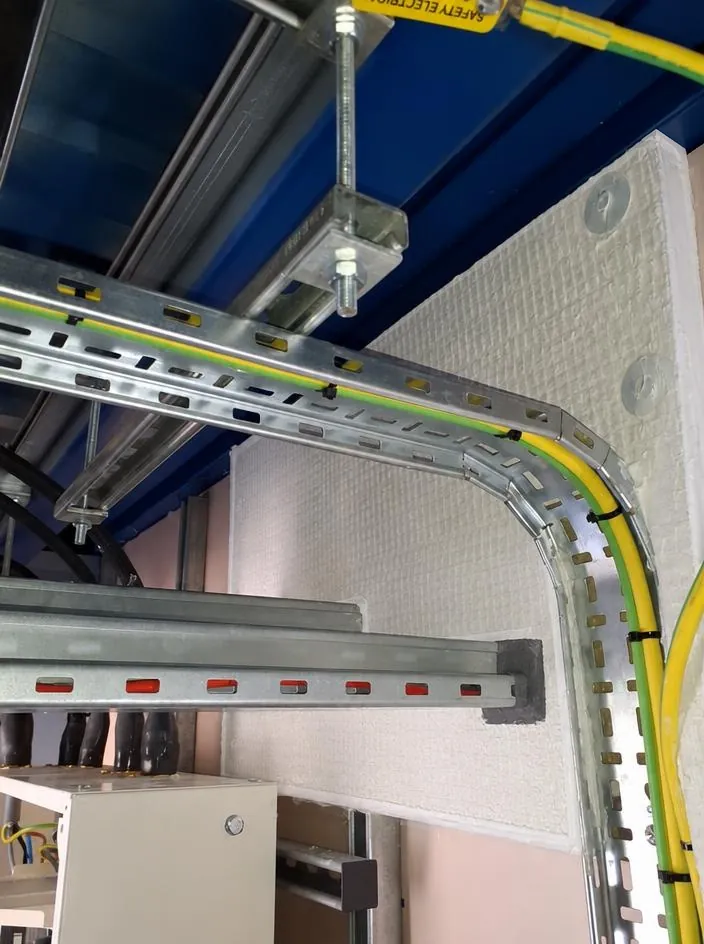
Fire-resisting walls and floors only hold back fire and smoke if the holes made through them are properly sealed. Every time a pipe, cable, duct or tray passes through a compartment wall or floor, it leaves a gap. Fire stopping is the material and system used to close that gap so the wall or floor keeps its fire resistance.
Our surveyors look at the places where these gaps are most often found:
- Penetration seals around pipes, cables, cable trays and ductwork
- Linear gaps, such as the joint between the head of a wall and the floor slab above
- Service risers and the floor slabs within them
- Ceiling voids above suspended ceilings, where compartment walls continue to the slab
- Plant rooms, switch rooms and service cupboards
- Areas where later works have added new services through existing walls
Where product data is visible, we note what has been used. Penetration seals are tested to BS EN 1366-3:2021 and classified to BS EN 13501-2:2023; on older buildings you may also find products tested to BS 476-20:1987 and BS 476-22:1987.
How do we carry out the survey?
Our surveys are visual and non-intrusive. We survey what can be seen and reached where access is provided. By arrangement, we lift ceiling tiles and open hatches, risers and service cupboards so we can see the walls and floors behind them.
We do not open up walls or ceilings, or cut into existing seals, as part of a standard survey. If you want intrusive inspection, it happens only when it has been separately agreed in writing beforehand, so everyone knows exactly what will be opened, who will make it good and how it fits with your asbestos management.
We plan each visit around how the building is used. That can mean out-of-hours working, escorted access in secure areas, or surveying occupied areas in short windows to keep disruption down.
What do you get at the end?
You receive a digital report in which every observation is photographed, referenced to its location in the building and described in plain language, with a recommended remedy. Where you provide floor plans, observations are marked on them so anyone can find the location again.
We report what we find. We do not grade risk, rank priorities or set timescales. Your Responsible Person decides what happens next, with their Fire Risk Assessor.
What is the report not?
The report is not a works specification and it is not a compliance certificate. It describes what we observed on the day, in the areas we could access.
Before any remedial works start, a competent installer verifies the scope and the products on site. If you would like us to arrange that, see Fire Stopping Remedial Works.
What do we need from you before the survey?
A little preparation makes the survey quicker and the report more useful:
- Floor plans, if you have them
- The current fire risk assessment
- The fire strategy, if there is one
- The asbestos register for the areas we will access
- Access arrangements: keys, escorts, permits and any out-of-hours windows
If some of these are missing, tell us. We can still plan the survey, and we will note in the report anything that limited what we could see.
Why does fire stopping matter under the Fire Safety Order?
The Regulatory Reform (Fire Safety) Order 2005 (as amended) requires the Responsible Person to take general fire precautions and to keep them maintained. The Fire Safety Act 2021 made clear that the Order covers a building's structure, which includes the walls and floors that form fire compartments. An accurate record of the condition of fire stopping helps the Responsible Person and Fire Risk Assessor make informed decisions.
No legislation sets a fixed frequency for fire stopping surveys. How often to survey is a matter for the fire risk assessment, and it is good practice to re-check after any work that passes through fire-resisting walls or floors.
Frequently asked questions
Do you lift ceiling tiles during a fire stopping survey?
Yes, by arrangement. We lift ceiling tiles and open hatches, risers and service cupboards where access is provided. We do not open up walls, ceilings or existing seals unless that has been separately agreed in writing beforehand.
Is the survey report a certificate?
No. The report records what we observed, with photographs, locations and recommended remedies. It is not a compliance certificate and not a works specification.
How long does a survey take?
It depends on the size of the building, how much access is available and how the building is used. We confirm the time on site when we quote.
Will you tell us which defects to fix first?
No. We report what we find. Your Responsible Person decides priorities with their Fire Risk Assessor.
How often should fire stopping be surveyed?
No legislation sets a fixed frequency. It is a matter for your fire risk assessment, and it is good practice to re-check after any work that passes through fire-resisting walls or floors.
Can you survey occupied buildings?
Yes. We plan visits around your operations, including out-of-hours visits and escorted access where needed.
Related services and guides
- Fire Stopping Register & Records: What to Keep
- Guide: Common Fire Stopping Defects Found in Surveys
- Guide: How Often Should Fire Stopping Be Inspected?
- Compartmentation Surveys
- Fire Stopping Remedial Works
- Measured Drawings
- Guide: What is a fire stopping survey? A guide for property managers
- Guide: Fire stopping vs compartmentation: what's the difference?
Ready to Get Started?
Send us a single address or your whole building list and we'll come back with a no-obligation quote, usually within 24 hours.
Request a Free QuoteFire Stopping Surveys is a trading name of RiSKFiX LLP, a registered company founded in 2016. About RiSKFiX LLP and our surveyors